Leo & Strength
When talking with a client recently, we discussed the woman taming the lion on the RWS version of the Strength card. Most people look at the woman and think, how is she holding the jaws of a lion open with such ease and calm? Or, how has she miraculously tamed him enough to look down his throat? We perhaps consider the woman to be an enchantress of some sort, especially due to the infinity symbol above her head that points us back to the Magician card.
But what about the lion? He doesn’t look very comfortable. He is not matching the woman’s serene composure. The look in his eyes is one of fear; he looks pretty frightened to me. And yet he isn’t fighting back. Lions are known for their strength and endurance; they are commonly seen as a symbol of courage, yet they are wild creatures. I’m pretty sure they don’t want to be tamed. That is their beauty, their strength.
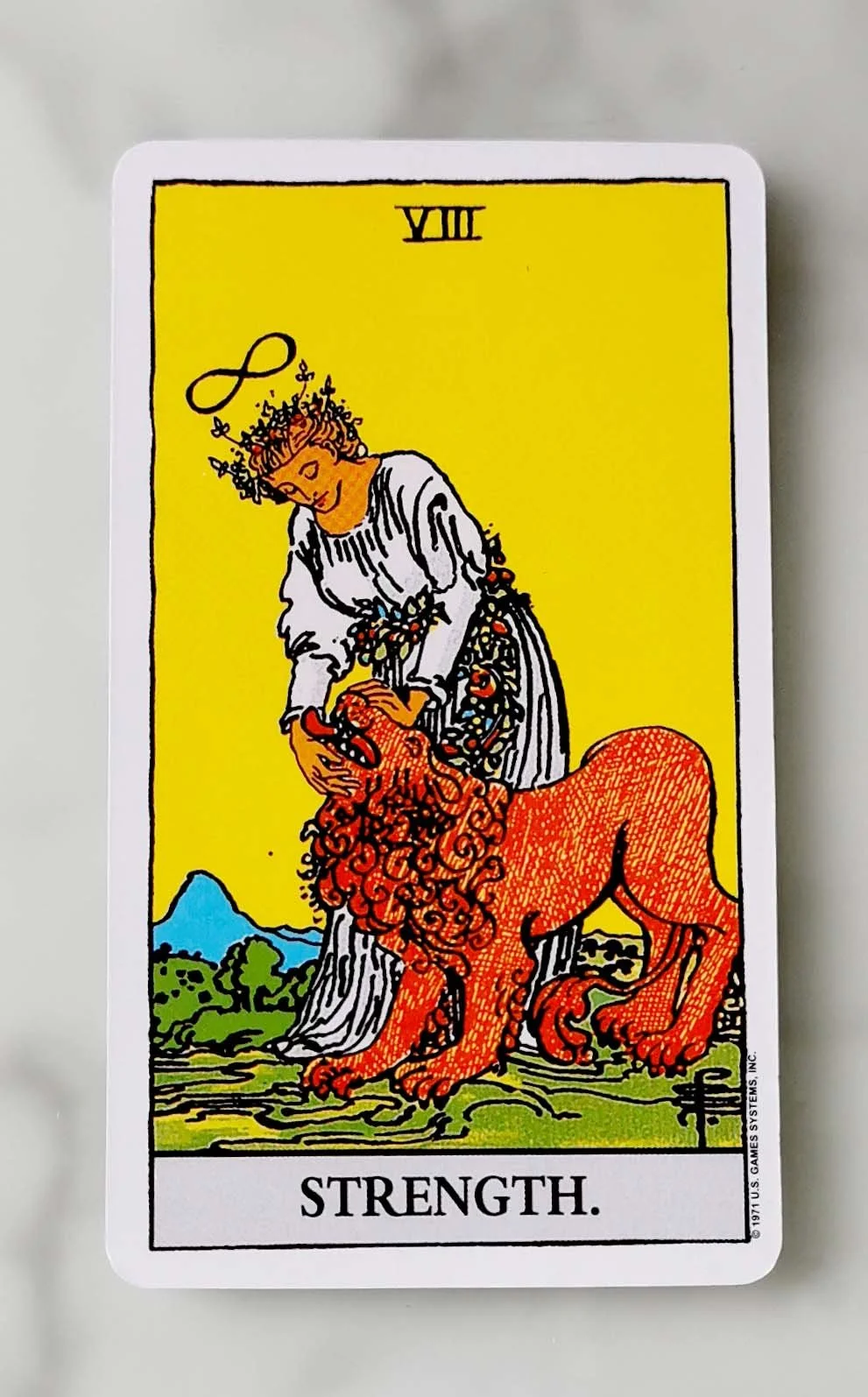
Strength, Rider Waite Colman Smith tarot
Courage is said to reside in the heart. The English word courage originates from the Latin cor, meaning heart. In the Western zodiac, Leo, the sign of the Lion, falls between 22 July and 23 August and rules the heart. The Strength card was suitably paired with the zodiac sign of Leo by the Hermetic Order of the Golden Dawn, an occult society that was prominent in England in the late nineteenth/early twentieth century.
Leo is a fixed fire sign, considered masculine with its ruling planet, the Sun. Leo natives are said to be confident, creative, generous, romantic and can be flamboyant. In many cultures, lions are associated with nobility and victory, from the Lion of Babylon, associated with the Goddess Ishtar, to the Lion of Judah, a central figure in Rastafari and Judaism.
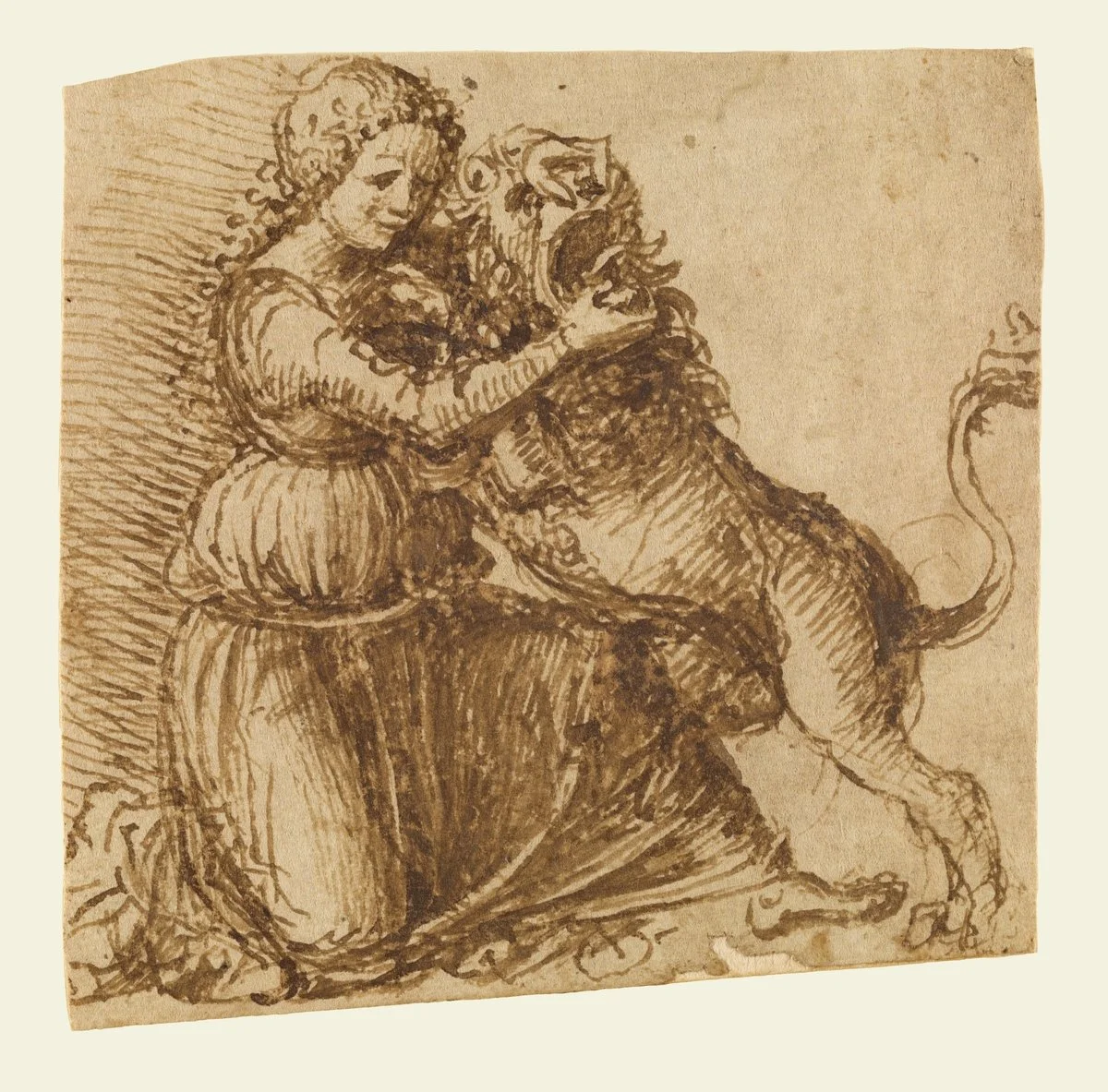
Fortitude, Giovanni Bellini
On older decks, the Strength card was called Fortitude. Fortitude in classical philosophy is one of the four cardinal virtues, and is associated with the strength of the mind to overcome adversity and pain. When we encounter adversity, it can sometimes take all our might to stay in control, to keep calm, and not rage, scream, shout and cry and demonstrate what is seen to some as the ‘wild’ side of human nature. This level of composure in the face of adversity is seen as a strength.
The Strength archetype, particularly on the RWS depiction of the card, points to dualistic qualities, the calm composure of the maiden and the frightened lion representing two opposing emotional and psychological states of being. Being calm is the opposite of being angry. Anger is energy often considered to be negative, but it is still energy, powerful energy that, if channelled correctly, can be used for positive transformation, such as creativity.
From a personal point of view, I was incredibly angry as a teenager/young adult. Over time, I learnt to channel that anger into pursuits that helped me to release that energy in positive ways, such as sport and art. This then led me back to my heart centre. I slowly developed compassion for myself, and I began to self-heal in a way. The awareness of my angry side has helped me become a calmer person in general.

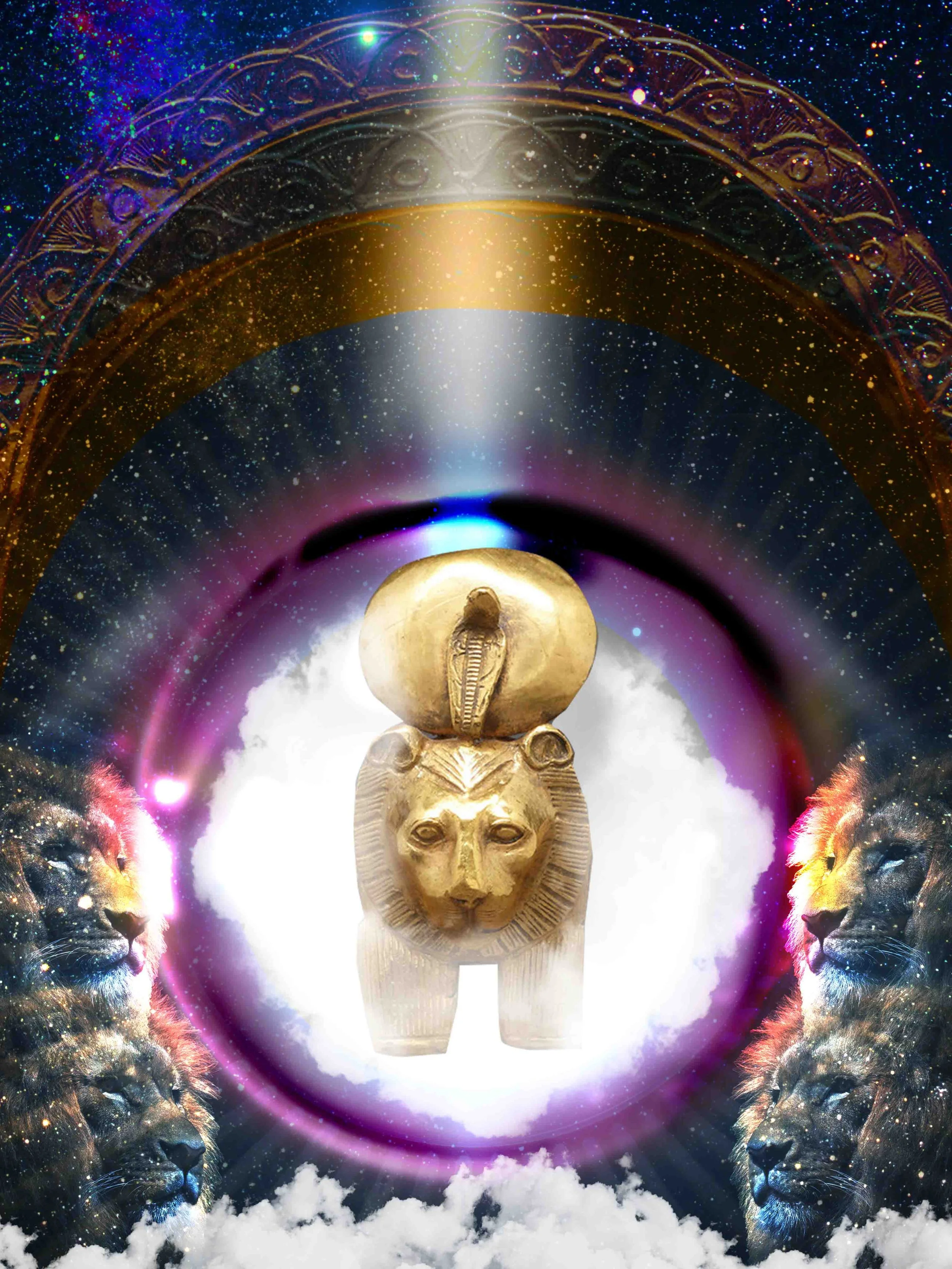
Statue Della Dea Sekhmet
From a mythological point of view, I think of Sekhmet, one of my favourite goddesses, who is the epitome of embodying dualistic aspects. Sekhmet is an ancient Egyptian warrior goddess, often depicted with a lion's head with a solar disk in her crown. She is a healer and protector on one hand and the goddess of war and destruction on the other. Some ancient Egyptian myths see her as another aspect of the goddess Hathor, the goddess of love and beauty.
According to ancient Egyptian myth, the sun god Ra, angry with the lawlessness of humanity, wants to bring balance and justice to the Earth once again, to reset the ‘Ma’at’. He sends his daughter, the goddess Hathor, to Earth in the form of a lion, where she transforms into the goddess Sekhmet. Sekhmet begins her task, but soon she becomes so enraged that she can’t stop her bloody rampage, killing the people of Earth, leaving a bloodthirsty trail behind her. She is only stopped by being lulled to sleep from drinking too much beer, which she is tricked into drinking, thinking it is blood.
The other side of Sekhmet is associated with healing and medicine, and she could cure any ailment or disease. As such, she was the patron of doctors and healers. This is the side that brings us back to the heart, the compassionate side of the goddess.
The Strength archetype calls on us to become aware with gentle grace of the so-called wild side of our nature. To calmly look into the jaws of a lion, (metaphorically so to speak), at our fears and desires and to tame the urge to look away from what we see. This is no easy task, finding the inner strength to have compassion for ourselves. The card suggests that we have the inner strength to listen to our hearts, where our true self resides. We have the stamina to face our problems, to endure the adversity we encounter with calm composure. Your heart knows your true self. A person who creates and loves from their heart is a mighty force of being.
Bibliography
Matthews, C (1997) The elements of the Goddess
Pollack, R (1997) Seventy Eight Degrees of Wisdom
Greer, M (2021) Archetypal Tarot
Pinkola Estes, C (1992)Women Who Run With the Wolves
Lesso, Rosie. "Why Was Sekhmet Important to Ancient Egyptians?" The Collector.com, May 31, 2022, https://www.thecollector.com/why-was-sekhmet-important-to-ancient-egyptians/